In the Philippines, all four outputs of the AKCMM project are being implemented, with the agriculture and waste sectors identified as a priority for program delivery. A total of USD 2.9 million has been mobilized from AKCMM to support project activities in the country. Implementation is led by the Philippine Methane Reduction Committee (MRC), which serves as the main national decision-making body responsible for project oversight, output validation, project adjustments, and the selection of priority sectors and interventions.
GGGI works closely with a wide range of government partners in the Philippines. Key partners include the Department of Environment and Natural Resources (DENR), which serves as the country’s National Focal Point to the ASEAN Working Group on Climate Change, and the Climate Change Commission (CCC), the lead agency for the national greenhouse gas inventory. Other actively involved agencies include the Department of Agriculture (DA), Department of Energy (DOE), Department of Science and Technology (DOST), and the National Irrigation Administration (NIA).
Enhance the government’s capacity to develop policies and provide oversight for methane mitigation at the national level.
Conduct capacity‑building initiatives that will strengthen the strategic, technical, and financial skills needed for the MRC’s successful operation.
Address gaps to improve the measurement of methane emissions which will be essential for managing country’s emissions.
Implement methane reduction projects in priority sectors that will demonstrate capability and open more opportunities for domestic and international support.
The Philippines' component of the AKCMM project has made strong progress since its launch in May 2025. The Philippine Methane Reduction Committee (MRC) is actively leading national-level project management and coordination, with initial government interest in institutionalizing the MRC to ensure long-term sustainability of methane mitigation efforts.
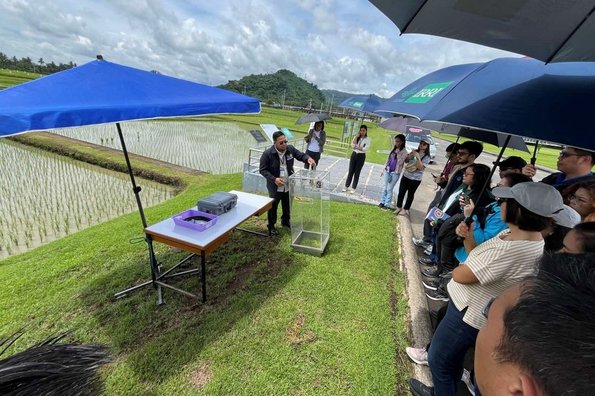
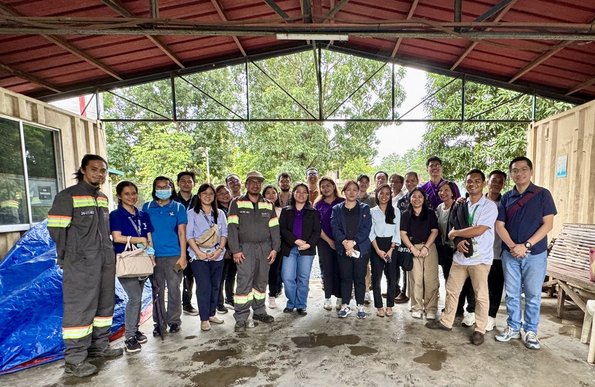
Key planning instruments are currently being developed, including the Methane Reduction Plan (MRP) and the Capacity Development Action Plan (CDAP). The MRP will provide a national roadmap for achieving methane reduction targets, building on the recently completed National Action Plan on Short-Lived Climate Pollutants (NAP on SLCPs). The CDAP will strengthen the strategic, technical, and financial capacities of MRC members. In parallel, MRC members have participated in hands-on training on methane measurement methods across rice cultivation, livestock, and solid waste sectors.
Technical partners, including the International Rice Research Institute (IRRI), Clean Air Asia, and the University of the Philippines Los Baños, were engaged to improve the national methane emissions inventory. Project prioritization has also been completed, with agriculture and waste identified as focus sectors. Priority interventions include Alternate Wetting and Drying (AWD) in rice production and methane recovery from municipal organic and livestock waste through digestion technologies.