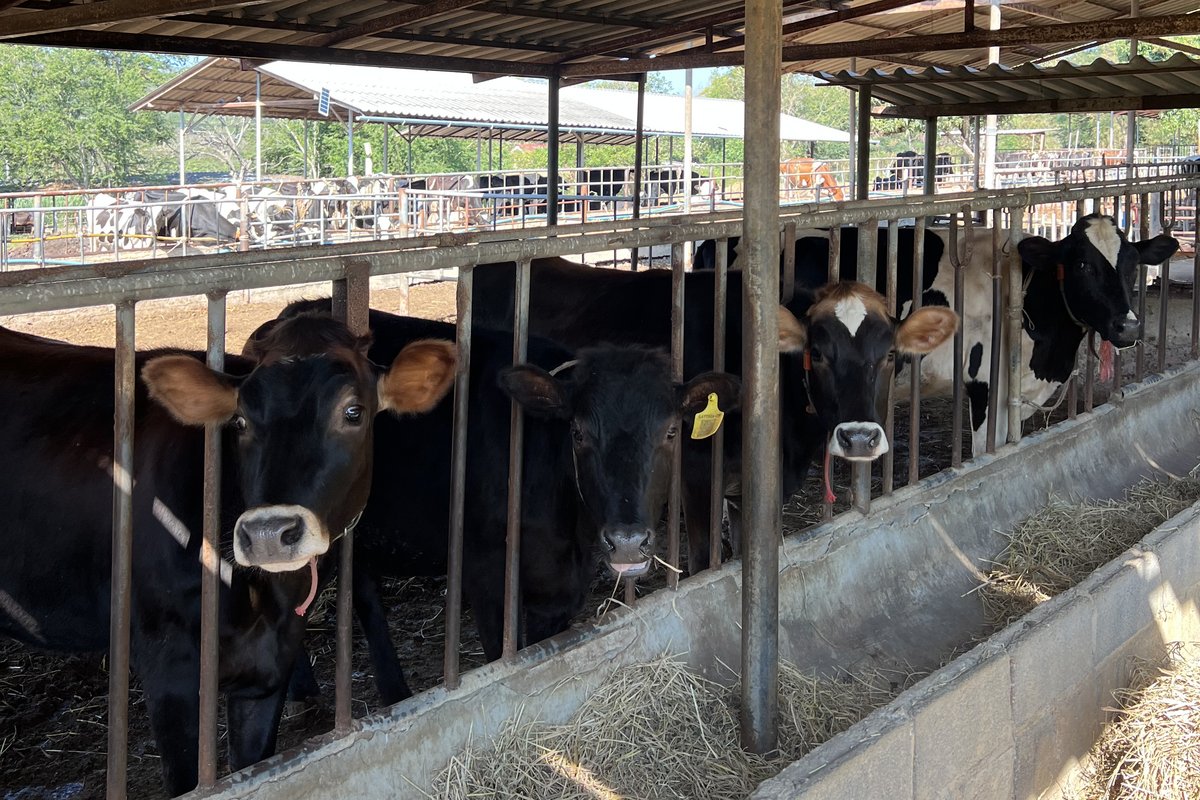
The study aims to assess the technical feasibility and financial implications of interventions designed to reduce methane emissions from enteric fermentation in dairy cows. Selected methane-reducing feed additives and supplements will be tested under controlled conditions using respiratory head-hood chambers, as well as in designated dairy farm settings, to reflect real-world operating conditions. The assessment will focus on methane reduction performance and impacts on dairy cow productivity, including milk yield and quality. Findings from this feasibility study will provide evidence to inform the potential scalability and market applicability of these solutions in Thailand, supporting efforts to reduce methane emissions from the livestock sector.
To assess the technical and financial feasibility of selected enteric fermentation methane mitigation measures for dairy cows in Thailand.
To provide evidence-based decision making for National Project Steering Committee in Thailand.
Conduct a technical assessment of selected methane mitigation interventions.
Quantify methane mitigation potential using a ventilated hood (head chamber) measurement system.
Assess impact of the interventions on milk yield and milk quality.
Evaluate the financial feasibility and scalability of mitigation measures.
A detailed feasibility study report covering technical and financial assessment of selected enteric fermentation methane mitigation measures.
Experimental results quantifying methane mitigation potential, impacts on milk yield and milk quality.
A consolidated set of assumption, technical inputs, financial implications to support recommendation to the Project Steering Committee on feasible mitigation measures for progression to the implementation stage under AKCMM.